


DHL expands road freight network across GCC

Sonia Sali
Amid shifting trends in the Middle East, cargo movement is evolving, with road freight emerging as a key choice for efficient delivery. DHL Global Forwarding is strengthening its focus on road transport to ensure smoother and faster movement of goods across the region. In an interview with CargoTalk MiddleEast, Tobias Maier, CEO, DHL Global Forwarding Middle East and Africa highlighted that the sector continues to see strong demand for road solutions.

How does road network connect ports, airports, and business hubs?
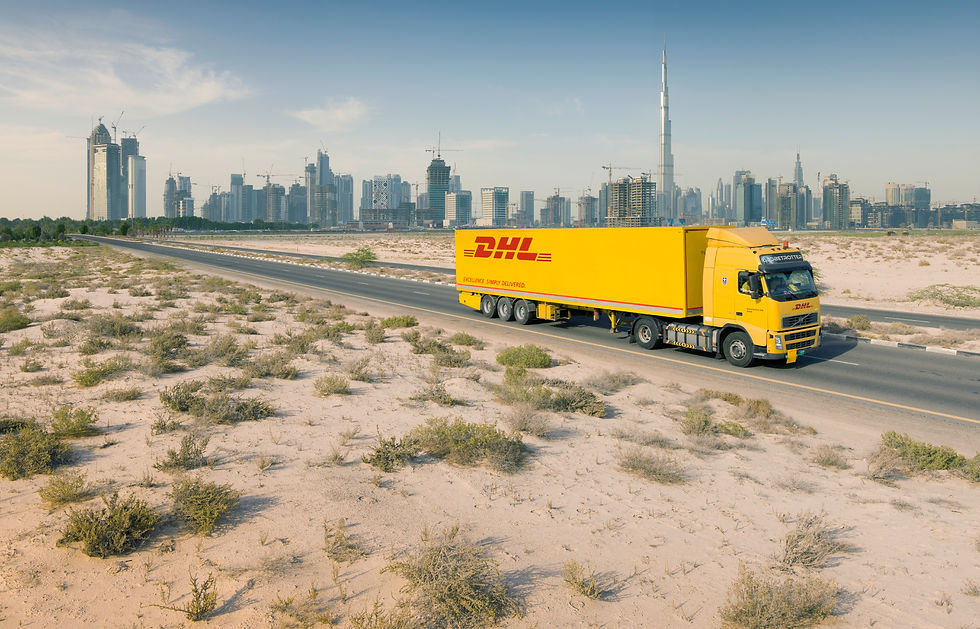
In this environment, road and multimodal solutions have become central to regional logistics operations. We have put a dedicated team in place to develop road network solutions connecting major logistics hubs across the GCC, including ports, airports, free zones and industrial areas. Alongside our own fleet, we secured additional dedicated trucking capacity, which allowed our teams to adjust capacity as needed and as conditions evolved.
The combination of air and road transport has become of major importance: A good example for this is our newly introduced dedicated charter solution for high-value healthcare and pharmaceutical shipments connecting Liège in Belgium with the GCC. There are three weekly charter flights, offering two temperature-controlled zones from +2 to +8 degrees Celsius and from +15 to +25 degrees Celsius, with onward delivery within the region supported through dedicated road connections.
Which GCC corridors handle the highest volume of road cargo today?
During the past weeks, road corridors linking Saudi Arabia and Oman to the wider GCC have become particularly important. As maritime traffic through the Strait of Hormuz has been suspended, cargo is discharged at alternative ports in Oman, at Fujairah and Khor Fakkan, as well as at Red Sea ports in Saudi Arabia, with onward trucking.
How do fuel prices and sustainability rules affect road cargo?
Increases in fuel prices and carrier-imposed surcharges have an impact, not only on costs but also on routing decisions. Our role is to help customers find solutions that best fit their needs, balancing transit time, cost and reliability, particularly when conditions remain volatile.
Are new regulations and insurance rules changing road cargo operations long term?
It is still too early to predict which adjustments, such as simplified regulations, will remain in place over the longer term. What is clear, however, is that the past weeks have demonstrated a strong ability to adapt across the region as temporary measures that support trade flows throughout the GCC have enabled cargo to keep moving.


Comments