


Uganda Airlines bets big on freighters to scale cargo growth

Sonia Sali
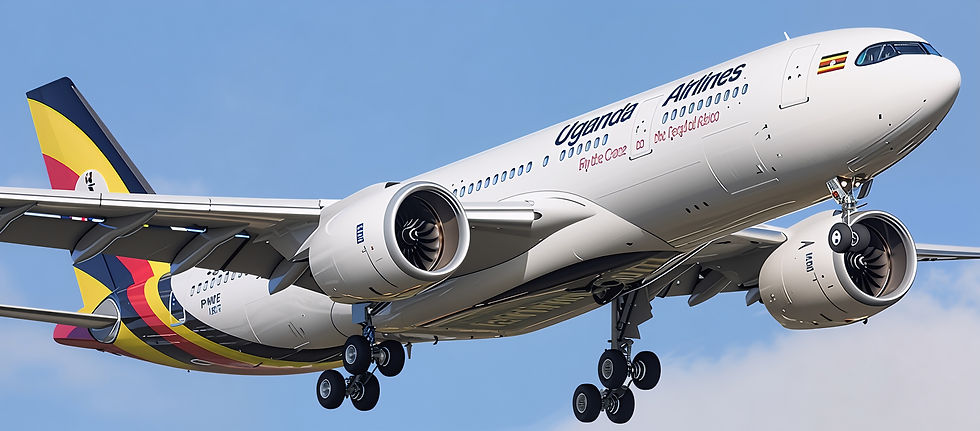
Recently, Uganda Airlines ordered two Boeing converted freighters—a 767 Converted Freighter and a 737 Converted Freighter. The new additions strengthen cargo operations and expand its presence in international markets. As Uganda Airlines' General Sales Agent (GSA), Rohit Thakwani, CEO of Airglow Aviation, speaks to CargoTalk Middle East about the airline's cargo ambitions, the strategic importance of the UAE, and Airglow Aviation's role in supporting its new freighter operations.

What does Uganda Airlines ordering two Boeing converted freighters signal about Uganda’s cargo ambitions?
It signals that Uganda Airlines sees cargo as a core growth pillar, not just belly-hold revenue on passenger flights. Uganda has the export base, the geography and the regional network to play a much bigger role in African air cargo, and dedicated freighter capacity gives the airline control over uplift, scheduling and market development. It also builds confidence for exporters and freight forwarders, who are no longer dependent on passenger aircraft space alone. This is a real step toward positioning Entebbe as a serious cargo gateway.
As Uganda Airlines’ GSA, how will Airglow Aviation support its new freighter ops?
Our job is to convert capacity into consistent revenue. Freighters don't succeed on occasional shipments. They need steady support from forwarders, exporters, importers and cargo agents. Airglow will build the right customer base, create market awareness, identify cargo flows in both directions, and position Uganda Airlines as a reliable cargo option between the Middle East, Uganda and the wider African network.
Was this decision driven by rising demand, or by a long-term national air cargo strategy?
Both, but the more telling point is that Uganda Airlines is thinking ahead. Demand is already there. We're seeing strong cargo movement into Uganda, alongside growing export potential from the country and the region. But ordering freighters isn't a short-term call. It reflects a long-term strategy to build cargo into a proper business line and support Uganda's wider trade and logistics ambitions.
How important is the UAE and Middle East market in deploying these freighters?
Extremely important. We already see very strong demand into Uganda, with flights often running full on the cargo side. But the opportunity extends well beyond Uganda alone. A good share of cargo landing at Entebbe can connect onward to other East, Central and West African destinations on Uganda Airlines' network. Freighter capacity means the airline can accept larger shipments, support project cargo, serve regular forwarder allocations and build genuine two-way trade between Uganda and the Middle East, offering commercial flexibility that passenger belly space simply can't match.
Do you see stronger cargo links between Uganda and Dubai, Abu Dhabi, and Sharjah?
Absolutely. Dubai, Abu Dhabi and Sharjah aren't just large cargo markets, they are major consolidation and redistribution points. Cargo from these hubs can move into Uganda and connect further into the region through Uganda Airlines' network, while Ugandan and regional exports move back into the Middle East and beyond. Dedicated freighters let the airline build dependable trade lanes instead of handling cargo only when space allows. Over time, this can help Entebbe grow into a stronger regional transit point for cargo moving between the Middle East and East and Central Africa.
Which East Africa cargo segments have the strongest growth potential in the GCC?
Perishables remain one of the strongest opportunities: fresh fruit, vegetables, fish, flowers and other temperature-sensitive products, provided the cold chain is reliable and transit times stay consistent. Coffee is another key segment, especially with growing demand for premium African coffee. We also see potential in pharmaceuticals, medical supplies, e-commerce, spare parts, machinery and project cargo moving the other way into Uganda and the region. The real opportunity isn't one-way export cargo. It's building balanced cargo flows between the GCC, Uganda and the wider African network.


Comments