


How Quiet Diplomacy Could Create NewOpportunities for Logistics Across West Asia andIndia


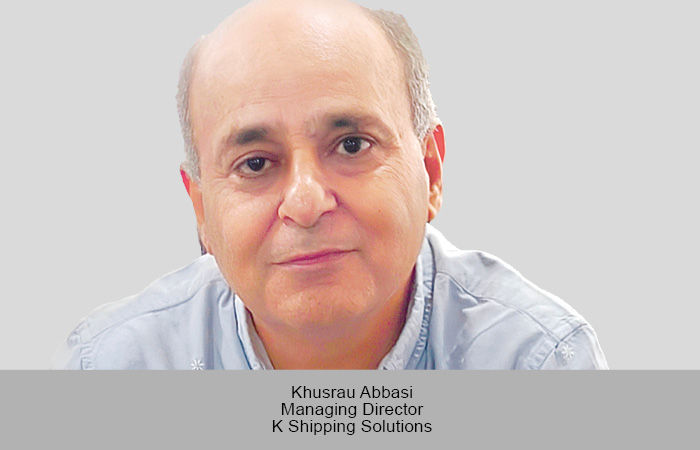
By Khusrau Abbasi
Logistics Industry Veteran and Managing Director, K Shipping Solutions Pvt. Ltd., India
While the world's attention has been focused on President Donald Trump and Iranian Foreign Minister Abbas Araghchi, a potentially more significant story may be unfolding behind the scenes. The emerging understanding between the United States and Iran appears to be driven not only by diplomacy, but also by economics.
Reuters reported that sources familiar with the negotiations said the UAE had discussed releasing billions of dollars in Iranian funds, although Abu Dhabi has officially denied any transfer. Qatar continues to hold billions of dollars in Iranian funds transferred under the 2023 prisoner-swap arrangement. More broadly, several regional powers—including Saudi Arabia, Egypt, Turkey and Pakistan—have increasingly emphasized diplomacy and economic cooperation, reflecting growing concerns that prolonged instability in West Asia carries significant costs for trade, energy markets and investment.
For the logistics industry, this evolving environment could prove transformational.
Stability Means Opportunity
West Asia's major economies depend heavily on uninterrupted trade and energy flows. Any easing of tensions around the Strait of Hormuz would improve confidence among ship owners, insurers, airlines and traders. Lower war-risk premiums and improved predictability would benefit supply chains across the Gulf and the Indian subcontinent.
India-UAE Trade Could Receive a Fresh Boost
The UAE has emerged as one of India's most important trading partners and logistics gateways. A more stable Gulf region would strengthen cargo flows involving pharmaceuticals, engineering goods, chemicals, perishables, textiles and electronics. Indian exporters may find renewed opportunities in Iran, Iraq, Central Asia and the wider GCC markets. Dubai and Abu Dhabi are likely to further consolidate their roles as transshipment and distribution hubs for the region.
New Opportunities for Mid-Sized Logistics Companies
Customers increasingly prefer integrated air, sea and land solutions. Demand for project cargo, warehousing, cross-border consolidation, digital documentation and compliance services is expected to increase. Should sanctions ease further, Iran could once again emerge as an important gateway connecting India with Central Asia and the Caucasus.
Areas to Watch
Developments in US-Iran negotiations; normalization of shipping through the Strait of Hormuz; reduction in insurance and freight costs; investments in ports, free zones and industrial corridors across the Gulf; expansion of India-UAE and India-GCC trade agreements; and rising demand for integrated supply chain solutions.
Conclusion
If peace proves durable, the biggest beneficiaries may not be governments alone, but businesses and supply chains stretching from Mumbai to Dubai, from Jeddah to Doha, and eventually from Chabahar to Central Asia. For the logistics industry, peace is not merely a geopolitical outcome; it is a commercial opportunity


Comments