


How the 14-Point U.S.–Iran Understanding Could Reshape Global Logistics and India-Gulf Trade

BEYOND DIPLOMACY
By Khusrau Abbasi
Diplomatic agreements are usually examined through political and strategic lenses. Yet, for the world of logistics, their consequences are measured differently—in freight rates, insurance premiums, cargo volumes, supply chain resilience and business confidence.
The recently concluded 14-point understanding between the United States and Iran has attracted considerable attention among diplomats and geopolitical analysts. However, beyond the headlines lies another equally important story—one that could influence global trade, energy security and logistics networks stretching from West Asia to Europe, Africa and Asia.
For shipping lines, airlines, freight forwarders, customs brokers and exporters, the agreement represents much more than a diplomatic breakthrough. Hidden within its provisions are signals that could affect freight rates, marine insurance premiums, investment flows and trade corridors for years to come.
Above all, the understanding seeks to restore something international commerce values more than anything else—confidence.
And confidence remains the true currency of global trade.
Why the Strait of Hormuz Matters

Few maritime passages possess the economic significance of the Strait of Hormuz. Situated between the Persian Gulf and the Gulf of Oman, this narrow waterway serves as one of the world's most important chokepoints. Nearly one-fifth of global crude oil consumption and substantial quantities of liquefied natural gas transit through these waters every day.
For the logistics industry, Hormuz is not merely a geographical location; it is the lifeline of global energy trade.
Any disruption immediately affects:
Crude oil prices.
Marine insurance premiums.
Ocean freight rates.
Air cargo demand.
Supply chain costs.
Manufacturing activity.
Inflation and consumer spending.
Consequently, events occurring in the Gulf region have repercussions far beyond West Asia. Factories in India, retailers in Europe and manufacturers in East Asia all eventually feel the impact.
Why Logistics Depends on Predictability
Unlike many industries, logistics operates on predictability. Businesses can manage high costs, but uncertainty presents a much greater challenge.
Whenever geopolitical tensions escalate, the logistics industry experiences:
Higher Freight Rates
Additional fuel costs, vessel diversions and congestion often translate into increased freight charges.
Rising Marine Insurance Premiums
War-risk surcharges increase significantly during periods of instability.
Delays in Vessel Schedules
Congestion and route adjustments reduce reliability and affect transit times.
Inventory Accumulation
Manufacturers and importers increase stock levels to protect themselves from disruptions. Higher Airfreight Demand
Shippers seeking speed and certainty often switch from sea to air, increasing air cargo volumes and rates.
Thus, geopolitical developments have direct operational and financial consequences for logistics providers around the world.
Lessons from Recent Crises
The COVID-19 pandemic, the Russia-Ukraine conflict and disruptions in the Red Sea highlighted how vulnerable transportation networks are to geopolitical shocks.
These events taught the industry several important lessons:
Diversification is essential.
Visibility and digitalization are critical.
Regional hubs are becoming increasingly important.
Supply chain resilience matters more than extreme efficiency.
The present developments in the Gulf are likely to accelerate these trends further.
India's Special Stake
Among major economies, few countries are as closely linked to Gulf stability as India. India relies heavily upon Gulf nations for:
Crude oil.
Liquefied natural gas.
Petrochemicals.
Fertilizers.
At the same time, the Gulf region represents one of the largest markets for Indian exports, including:
Pharmaceuticals.
Engineering goods.
Chemicals.
Textiles.
Food products.
Machinery.
Automotive components.
Millions of Indians living and working in Gulf countries further strengthen these economic ties. Peace and stability in the region therefore have enormous implications for India's growth and energy security.
The UAE: Bridge Between East and West
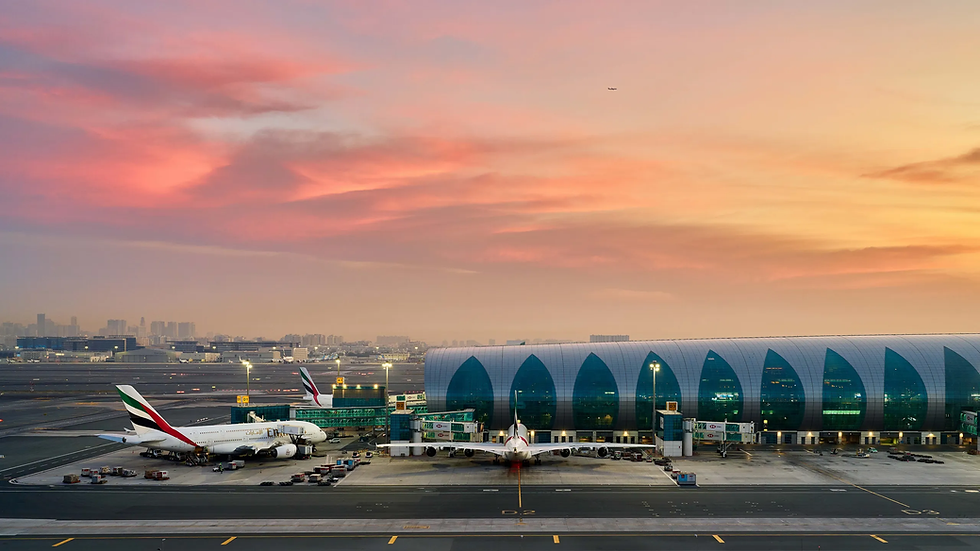
Over the last two decades, the United Arab Emirates has emerged as the logistics capital of West Asia. Dubai and Jebel Ali have become indispensable distribution hubs connecting Asia, Europe and Africa. Their strategic location, free zones and world-class infrastructure have transformed the UAE into a critical link in global supply chains. For Indian freight forwarders, Dubai increasingly serves not merely as a destination but as a platform for cross-trade business and regional distribution. Any improvement in regional stability is therefore likely to reinforce the UAE's position as a preferred gateway for international commerce.
Reading Between the Fourteen Points
Diplomatic agreements are often written in political language. Yet every clause carries commercial consequences.
Ceasefire Means Cargo Confidence
Whenever hostilities decline, deferred shipments begin moving again. Increased bookings, improved vessel utilization and stronger cargo flows usually follow.
Confidence creates cargo.
Predictability Encourages Investment
Stable conditions support industrial expansion, infrastructure development and manufacturing growth.
Predictability often matters more than profitability.
Sixty Days Could Trigger a Cargo Surge Importers and exporters may accelerate shipments during the negotiation period, leading to increased ocean freight volumes, higher air cargo demand and temporary port congestion.
Maritime Security Benefits Shipping
Improved navigation around the Strait of Hormuz enhances vessel scheduling and transit reliability. However, war-risk premiums are unlikely to disappear overnight.
Energy Security Benefits India
Reliable oil supplies translate into lower transportation costs and stronger industrial competitiveness. Ultimately, energy security becomes economic security.
Reconstruction Means Cargo
History teaches that reconstruction creates demand. Machinery manufacturers, engineering companies, industrial valve producers and chemical exporters could all benefit. Cargo follows investment.
Sanctions Relief Could Redraw Trade Routes
Alternative corridors such as Chabahar Port and the International North-South Transport Corridor (INSTC) could gain renewed importance. Dubai's role as a logistics platform may become even stronger. Stability Supports Supply Chains Businesses require confidence to forecast transportation costs, sign annual contracts and plan inventory levels. Predictability remains the lifeblood of logistics.
Oil Export Waivers Could Ease Inflation
Lower energy prices benefit manufacturing, exports and consumer confidence. For India, this could strengthen overall economic growth.
Investment Creates Trade
Infrastructure projects, industrial expansion and manufacturing growth all generate cargo. Investment and logistics have always moved together.
Trust Expands Commerce
Banks, insurers, shipping lines and airlines thrive in stable environments. Trade flows where confidence exists.
Regional Hubs Could Become Stronger
Dubai, Abu Dhabi, Doha, Jeddah, Dammam and Sohar are likely to strengthen their positions as strategic logistics gateways connecting Asia, Europe and Africa.
Impact on Ocean Freight
Ocean shipping has perhaps been the sector most affected by tensions in the Gulf.
As confidence gradually returns, container lines could experience:
Increased bookings.
Better capacity utilization.
Improved schedule reliability.
Temporary congestion caused by backlogged cargo.
Freight rates are likely to soften gradually rather than collapse.
LCL Consolidation May Expand
Less-than-container-load shipments often recover faster than full container loads. Consequently: Consolidators may witness higher demand.
Weekly services may expand.
Cross-trade opportunities may increase.
Dubai and Jebel Ali are expected to strengthen their role as consolidation hubs.
Project Cargo Could Be a Major Beneficiary
Future reconstruction and infrastructure investments could create opportunities in:
Power generation.
Petrochemicals.
Construction.
Water treatment.
Oil and gas projects.
Heavy-lift operators, breakbulk carriers and project logistics specialists could benefit significantly.
Tanker Shipping
No sector is more closely linked to Gulf stability than tanker shipping.
Improved navigation through Hormuz could result in:
Better vessel utilization.
Reduced waiting times.
Greater schedule reliability.
Nevertheless, operators are expected to remain cautious until confidence is fully restored.
Air Cargo: Poised for Growth
Periods of recovery often support airfreight growth.
Potential beneficiaries include:
Pharmaceuticals.
Vaccines and healthcare products.
Electronics.
Precision equipment.
Medical devices.
Luxury goods.
Cross-border e-commerce.
Perishable cargo.

Stable conditions are likely to stimulate further expansion of the UAE's role as a regional fulfillment hub serving the Middle East, Africa and South Asia.
Marine Insurance: Recovery Will Be Gradual
Insurance companies are generally among the last institutions to relax following geopolitical crises. War-risk premiums are unlikely to disappear immediately.
Underwriters prefer:
Stability.
Predictability.
Historical evidence.
Consequently, insurance costs are likely to decline gradually rather than suddenly.
Supply Chains Are Becoming More Resilient
Recent crises have transformed supply chain philosophy.
The old model emphasized "Just-in-Time" inventory.
Today's environment increasingly favors "Just-in-Case" supply chains focused on resilience and continuity.
This trend is expected to boost demand for:
Warehousing.
Distribution centres.
Free zones.
Third-party logistics services.
At the same time, digitalization and shipment visibility are becoming necessities rather than optional advantages.
The UAE: Natural Beneficiary
Dubai's strategic location positions it as the principal redistribution hub linking Asia, Europe and Africa. The UAE is likely to witness growth in: Cross-trade shipments. Warehousing. Consolidation. E-commerce. Distribution activities. Jebel Ali and Dubai South are expected to remain central to this transformation. Beyond Diplomacy At first glance, the fourteen points appear political. Yet viewed through the lens of logistics, they tell a different story.
They speak the language of:
Confidence.
Predictability.
Investment.
Energy security.
Trade corridors.
Supply chain resilience.
The agreement is ultimately about restoring confidence. Whether the present understanding evolves into lasting stability or proves to be only another temporary pause will depend upon the success of future negotiations. Yet one fact remains undeniable: The world of logistics is watching closely. Because the real story lies not in the headlines— It lies in reading between the lines.
Khusrau Abbasi is a logistics professional with over three decades of experience in international freight forwarding, supply chain management and global trade. He is Managing Director of K Shipping Solutions Pvt. Ltd., India


Comments